If you're here because you joined our waitlist and followed the link from our newsletter, thank you for being curious about the full story.
And if you've landed here with absolutely no idea what those first two sentences were about, welcome anyway. You're in the right place.
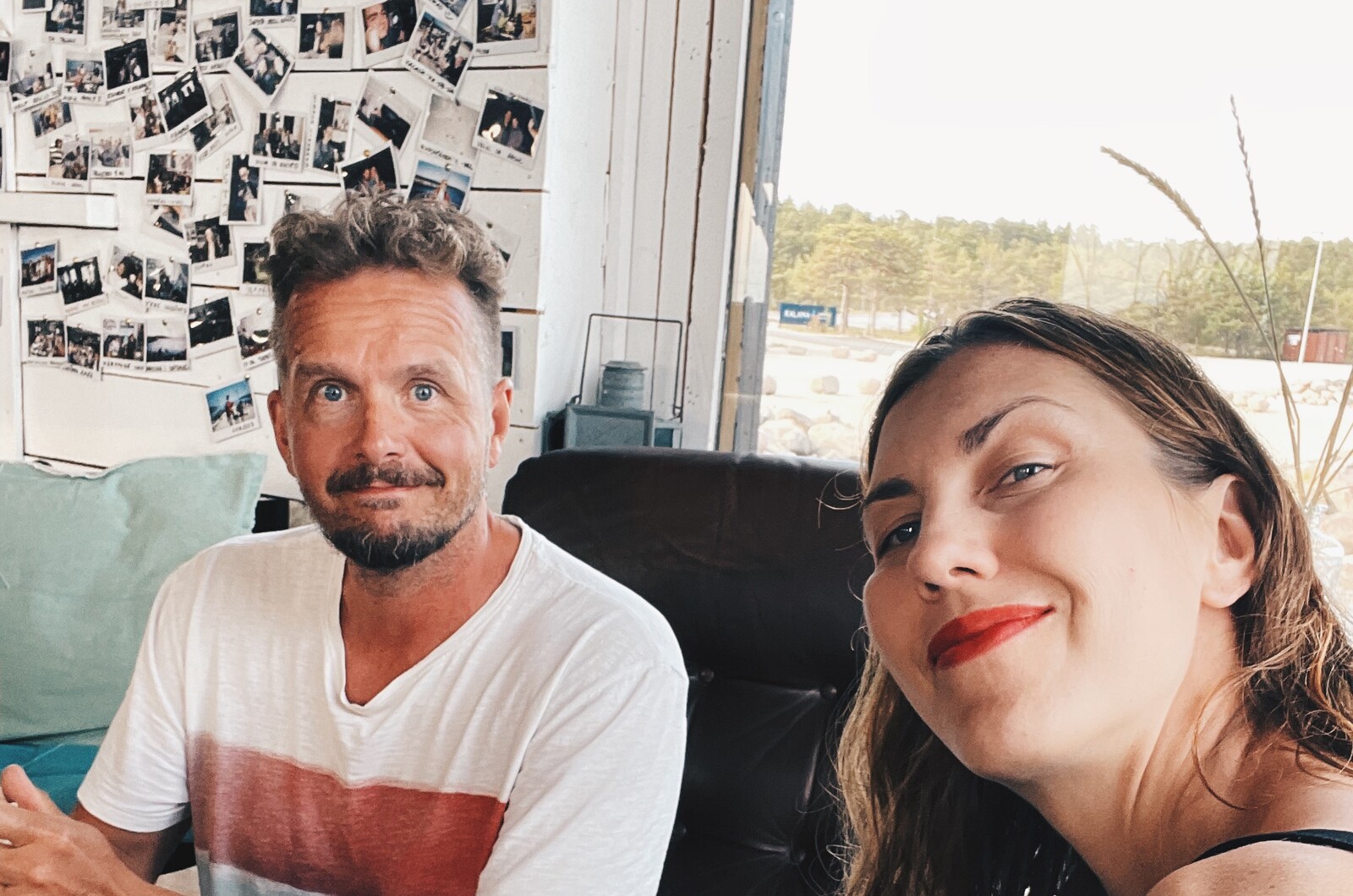
Let us introduce you to the founders of IRIS: Ronja Kissa and Mika Pajunen.
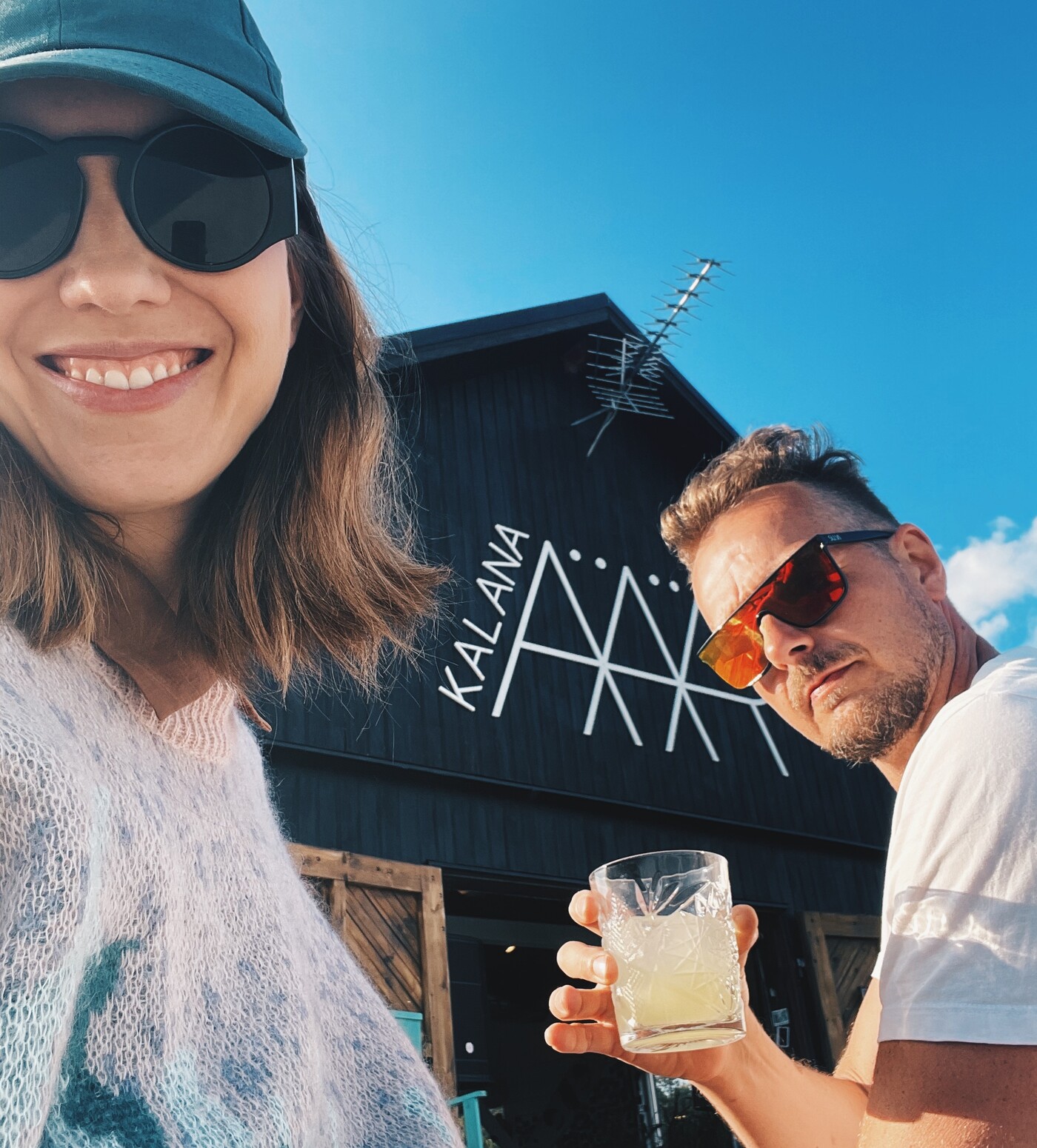
Ronja & Mika, Kalana.
Meet Ronja
What first brought you into casting, and what has kept you in it for more than 15 years?
My journey into casting began in the summer of 2003, when the Estonian feature film The Revolution of Pigs was being filmed. I had just turned 18 and went to the nation-wide casting as a talent myself. The production confirmed around 500 diversed youngsters. During the production we lived in a tent camp for several weeks while many scenes were filmed in an almost documentary style.
That summer, I knew with complete certainty that I wanted to work in film. In the autumn, I applied to film school, was accepted, and the rest is history.
What has kept me in casting is my strong intuition for recognising the right character, together with my love of working with people. Casting is full of unexpected situations, and no two projects – or people – are ever the same. That is exactly what continues to make it exciting.
After years of running casting companies, what problem did you keep seeing again and again?
Casting often comes at the very end of the production chain, which means our real work may begin only shortly before filming starts. Timelines are tight, yet casting involves a huge amount of administration, communication and coordination between many people.
In today's digital casting era, information is often scattered across emails, links, files and different platforms. Communication can start to feel like a game of broken telephone. When everything is rushed, there is less time to search beyond the obvious choices, meet new people and test unexpected talent. As a result, great new faces can easily be missed.
I have also seen many talented casting directors leave the profession once they start a family. The work can be too unpredictable, with sudden requests, changing schedules and intense last-minute pressure. For me, this is another sign that casting needs better tools and more sustainable ways of working.
What do people outside the industry often misunderstand about casting?
One morning at 7 a.m., I was sitting at the breakfast table on set with the third assistant director. I had slept exactly zero hours.
Our lead actor had unexpectedly dropped out because of a family emergency, just before the shoot was due to begin. I had spent the entire night searching for replacements, checking old casting videos and showreels, sending availability requests, chasing answers and trying to keep track of every person I had contacted. I cried at one point, pulled myself together and kept going, because the whole production depended on finding a solution.
Then some members of another department team joined the table and asked why I looked so exhausted. One of them joked that casting was only about making a few phone calls and being charming to people.
That is probably what people misunderstand most. Casting may look simple from the outside, but behind every successful choice is a huge amount of research, coordination, negotiation, judgement and problem-solving — often under intense time pressure. When casting works well, nobody sees the crisis that was avoided.
When casting works well, nobody sees the crisis that was avoided.
Why did you feel IRIS had to be built by people who understand casting from the inside?
Casting is full of nuances that are difficult to understand from the outside. IRIS is being built for five different stakeholders — the casting director, director, producer, performer and agent — and all of them need to communicate and work together smoothly.
Someone can research the industry, but research alone does not reveal all the small decisions, exceptions and pressures that shape the real workflow. That knowledge comes from doing the work for years — and also from making mistakes, learning from them and understanding what should work better.
Our aim is to build a platform that is deeply thought through, yet extremely simple to use — one that supports the whole casting process without forcing people to jump between several different tools. And when something does not work as it should, we want people to tell us. That feedback is not criticism; it is how we make IRIS better.
Ronja, at office.
What has been the most exciting part of creating IRIS so far?
Ooh, that is a great question. The most exciting part has been realising that this is not only our problem — it is a global one.
The more casting professionals, producers, directors and performers we speak with, the clearer it becomes that people everywhere are struggling with the same fragmented processes, time pressure and unnecessary stress.
Seeing the scale of the industry has also made us understand how many people IRIS could genuinely help — not only financially, by saving time and reducing wasted work, but also by making their everyday work smoother, healthier and more enjoyable. Realising that we could create that kind of impact has been incredibly exciting.
What has been the most difficult part?
The difficult part has been balancing the everyday work of running casting companies with building a global startup. Casting is fast-moving and unpredictable, while building IRIS requires long-term thinking, deep focus and careful planning.
But personally, the hardest part has been embracing the lean startup approach. We are building for five different stakeholders — the casting director, director, producer, performer and agent — and each has workflows full of important nuances. I can already see how much IRIS can eventually become, so launching only the first part of that vision is difficult for the perfectionist in me.
The challenge is to build an initial product that is focused and simple, but still strong enough for people to understand the larger vision behind it. I am learning that the first version does not need to contain everything — it needs to solve the right problem well and create a solid foundation for what comes next.
When IRIS is live, how do you see the role of the casting director evolving?
The answer is simple: good casting directors will become remarkably good — and even more sought after.
When technology handles more of the administration, coordination and repetitive parts of the process, casting will no longer be mainly about who can manage the workflow best. The real difference will be creative judgement: who understands the director's vision most deeply, recognises what a role truly needs and sees potential in people that others may miss.
IRIS will give casting directors more time to focus on taste, intuition, relationships and bold choices. The strongest casting directors will not become less important. Their expertise will become much more visible.
What is your personal hope for how IRIS will help casting teams, productions and performers?
My personal hope is that IRIS will bring everyone involved in casting closer together, so casting teams, productions, directors, agents and performers can work towards the same goal: finding the right person for the role and helping them bring the story to life.
Casting will always involve pressure and unexpected situations, but the process should not be stressful because information is scattered, workflow is manual, or communication is unclear. I believe that IRIS can make casting more connected, creative and human for everyone involved.
For casting teams, IRIS will remove unnecessary administration and give them more time for creative thinking and discovering new talent. For productions, it will create a clearer, faster and more reliable process. And for performers, IRIS will provide better information, guidance and a feeling that their time and effort are respected.
Meet Mika
How did your production background shape the way you see casting?
From a producer's and the film's perspective, casting is a major factor in a production's success. Directors' wishes and vision are fairly clear at the outset, but just as often they sharpen — or even shift — along the way. The casting director's input is always wanted, and there's always a deadline. Over a 20-year producing career, casting's importance to a project's success has only become more pronounced. The better we can answer the brief, and the faster and more reliably we find the right actor, the stronger the production's creative position.
From a producer's point of view, where does casting often become complicated, slow or unclear?
Casting can become challenging right from the start if the brief is misinterpreted or incomplete. Differences in vision are another factor that can complicate the journey. A clear brief and clear, sufficient communication are essential. Problems often come down to time pressure and a lack of communication, or to timing.
Why is casting not only a "casting department problem", but a production workflow problem?
As I noted earlier, casting is a significant part of conveying a film's message. A casting department problem is, by definition, a production problem. Scheduling and workflow have to be planned so that everyone has the time to do their work to the best of their abilities. If the schedule is too tight, the problem is fundamentally a production problem that simply lands on the casting department's plate.
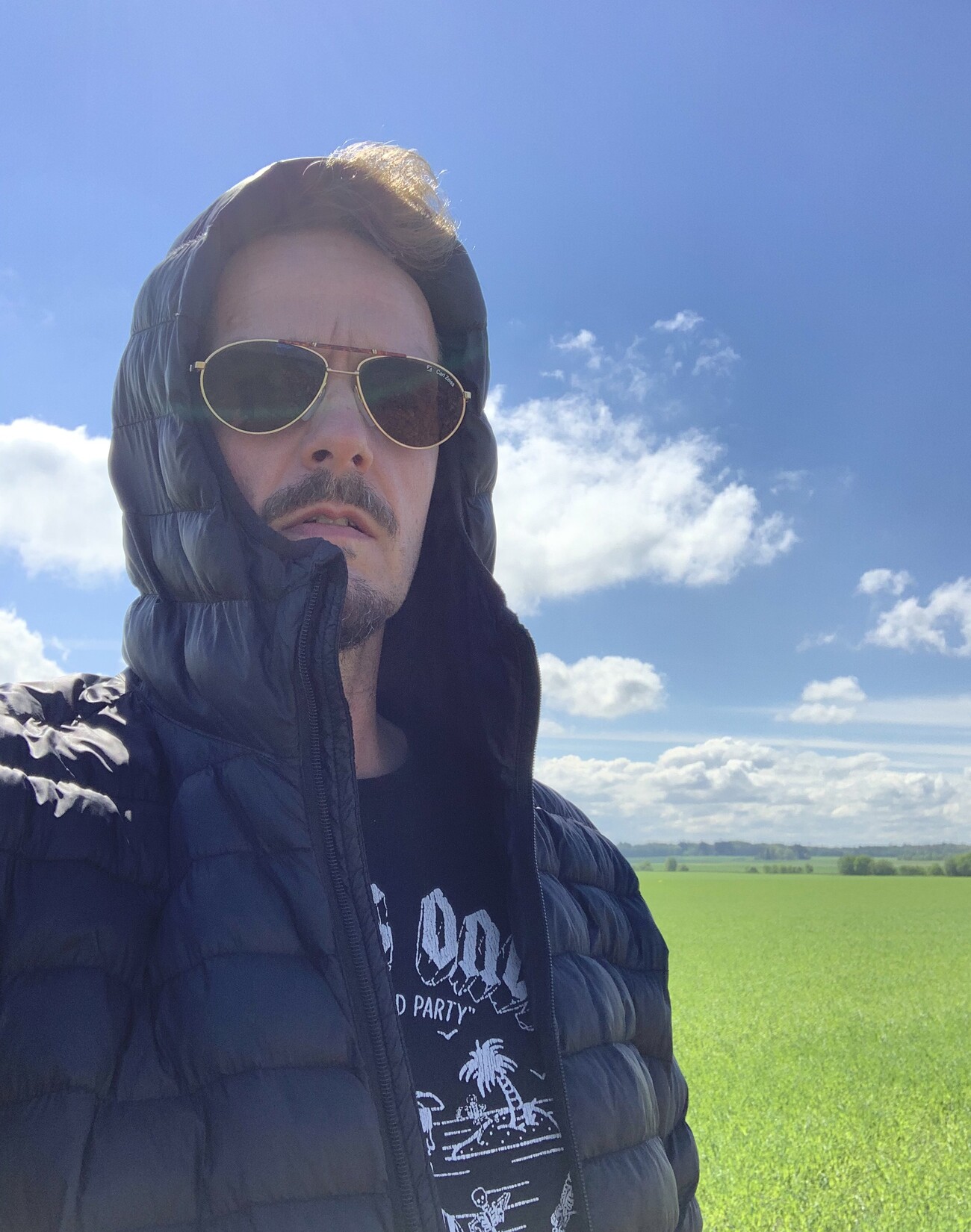
Mika on the field.
Why do you think IRIS has the potential to become the next industry standard for casting, production teams and directors?
In my experience, in situations where there's too little time for one reason or another, communication, workflow and budget should compensate for the lack of time. Most of the time, however, that isn't the case. There is no single channel through which the entire casting workflow runs from start to finish. And even when there is enough time, using multiple platforms and messaging channels can create problems of its own. IRIS fixes both of these gaps — and it also frees up casting's time, shifting it from project management to creative work: finding and selecting actors. That is precisely the value-adding part of a casting director's work — the part that is both expected and paid for.
What has been the most exciting part of creating IRIS so far?
Creating something new and solving problems is part of a producer's everyday work. IRIS approaches a long-standing problem from a new angle — and as production timelines have shortened, that problem has only gotten worse. It's been fascinating to see how out-of-the-box thinking and evolving technology have helped create a system capable of meeting this challenge. Building a multifaceted, cross-disciplinary solution in collaboration with professionals from other fields has been a process demanding a new kind of problem-solving and thinking — and watching it come to life has been absolutely rewarding.
What has been the most difficult part of creating IRIS so far?
The startup world leans toward speed and the simplest possible MVP. The most challenging part of developing IRIS has been figuring out how to build the cleanest, most streamlined product possible — one that serves many stakeholders with very different needs, even though the root of the problem is the same. IRIS isn't simple, but it's the most streamlined solution possible that still meets the requirements we set for it. I believe we've found solutions to every problem, from both the stakeholders' and the product development perspective.
IRIS frees casting's time from project management, back to creative work.
Building the future and making the dream come true.